Weissach: From Prosperity to Challenges
Not long ago, Weissach, a quaint town just 30 minutes from Stuttgart, was Germany’s wealthiest local authority. With a population of 7,700, it hosts the development center for luxury carmaker Porsche. The town’s budget thrived on substantial trade taxes from Porsche’s billion-dollar profits.
In 2009, the town collected €20,000 ($23,000) in taxes per resident.
“Thanks to Porsche, Weissach boasts the highest per capita tax revenue in Germany,” said former mayor Ursula Kreutel in 2011 during the inauguration of a Porsche facility extension.
Families building homes in Weissach received a €10,000 bonus per child. The town invested in a four-story library, a €100,000 concert piano, and subsidized private music lessons. Most funds were saved for future challenges, Kreutel assured.
Economic Downturn Hits Hard
The prosperous days have ended. Germany’s car industry faces its worst crisis ever. Porsche’s profits plummeted by 96% in 2025, and other sectors are also struggling. The tax revenue that municipalities relied on has sharply declined, leaving even affluent towns unable to meet expenses.
“Local government finances are in a dramatic decline,” stated Ralph Spiegler, President of the German Association of Towns and Municipalities (DStGB) and mayor of Nieder-Olm in Rhineland-Palatinate.
Rising Social Costs Strain Budgets
In Germany, responsibilities are shared among federal, state, and local governments. Local authorities handle many daily services, from waste management to education, firefighting, and social benefits.
According to the German Federal Statistical Office (Destatis), cities and municipalities spent €400 billion in 2024, with costs expected to rise in 2025 due to increasing personnel and energy expenses. Social benefits are the largest cost drivers.
“We’ve seen a threefold increase over 20 years without matching funding,” explained DStGB President Spiegler.
Costs for child and youth services, care, and integration support for people with disabilities were €38 billion in 2007 and are projected to exceed €102 billion by 2027.
Sharing the Burden: A New Approach
The integration of refugees and migrants is another challenge. Schools, language courses, and immigration offices are overwhelmed. The German Association of Towns and Municipalities suggests a new cost-sharing model: federal, state, and local governments each cover a third of social service expenses.
Local authorities also seek involvement in lawmaking, currently dominated by federal and state governments.
“This would distribute both financial burdens and the responsibility for social service reforms across all government levels,” Spiegler noted.
Growing Responsibilities, Limited Resources
In November 2025, mayors from all 16 German state capitals urged the federal government to ensure any law imposing costs on municipalities includes compensation plans. The principle: “Whoever mandates it, funds it.”
Local governments handle 25% of total government spending, yet receive only 14% of tax revenue, creating an “imbalance,” according to Spiegler.
Local deficits grow annually. “We’ve maxed out local taxes,” Spiegler said.
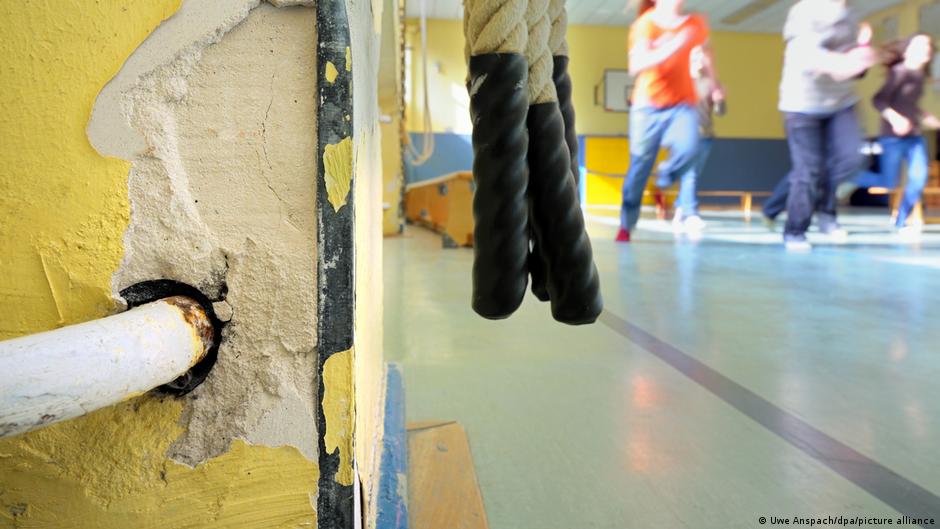
Budget cuts are widespread; projects are halted, and cultural initiatives are paused. An estimated €218 billion is needed for infrastructure repairs.
Local governments can’t incur long-term debt for ongoing costs, relying on costly short-term loans instead.
Germany’s state and federal governments recognize these financial challenges.
“We must support municipalities,” said German Chancellor Friedrich Merz of the Christian Democrats (CDU) in November.
However, they too face budget constraints amid the economic crisis.
Finance Minister Lars Klingbeil of the Social Democrats (SPD) announced relief measures for local governments in December, but details remain vague.
This article was originally written in German.
Stay informed: Every Tuesday, DW editors summarize key events in German politics and society. Sign up for the weekly Berlin Briefing newsletter.
